

The dream of immersing oneself in a virtual environment has existed for several decades. In the 1990s, films fuelled consumers’ dreams. However, companies at the time failed to deliver market-ready products. In the end, the hype of the 1990s was bound to fail because of excessive costs and immature electronics.
Today’s VR and mixed reality headsets
The current generation of VR headsets began around 2016 with the Oculus Rift. Since then, the devices have become significantly more powerful, lighter and mostly wireless: headsets such as Meta Quest 3, Apple Vision Pro, Samsung Galaxy XR or the models from HTC Vive and Pico work standalone, recognise hands and the room and use cameras to overlay virtual content onto the real environment (mixed reality). For professional use, there are also particularly high-resolution industrial headsets.
Universal use
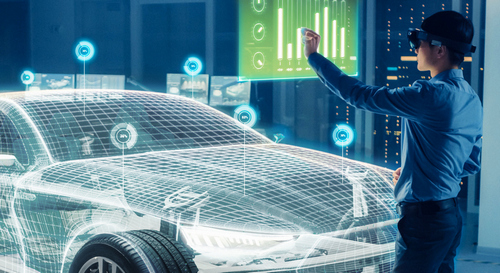
Virtual reality has long ceased to be limited to games and is used productively in many industries. Applications can easily be found across all areas such as culture (virtual archaeology and museums, architecture), research (simulation of complex structures, study of consumer behaviour), development (building planning, simulation, CAD design), life sciences (virtual operations in medicine, training and knowledge transfer, training and simulation of rescue operations, therapy of physical and mental impairments), sales (virtual vehicle viewing) and entertainment (games, communication, films).
Our service
We develop customised VR and mixed reality applications for your purpose – if required in combination with our own CAD products, for example to make buildings, plants or components from CAD data walkable. We recommend open standards such as OpenXR and WebXR so that your application is not tied to a single headset manufacturer. Anyone who has experienced this virtual world “with their own eyes” can confirm: “Seeing is Believing”!










 kununu